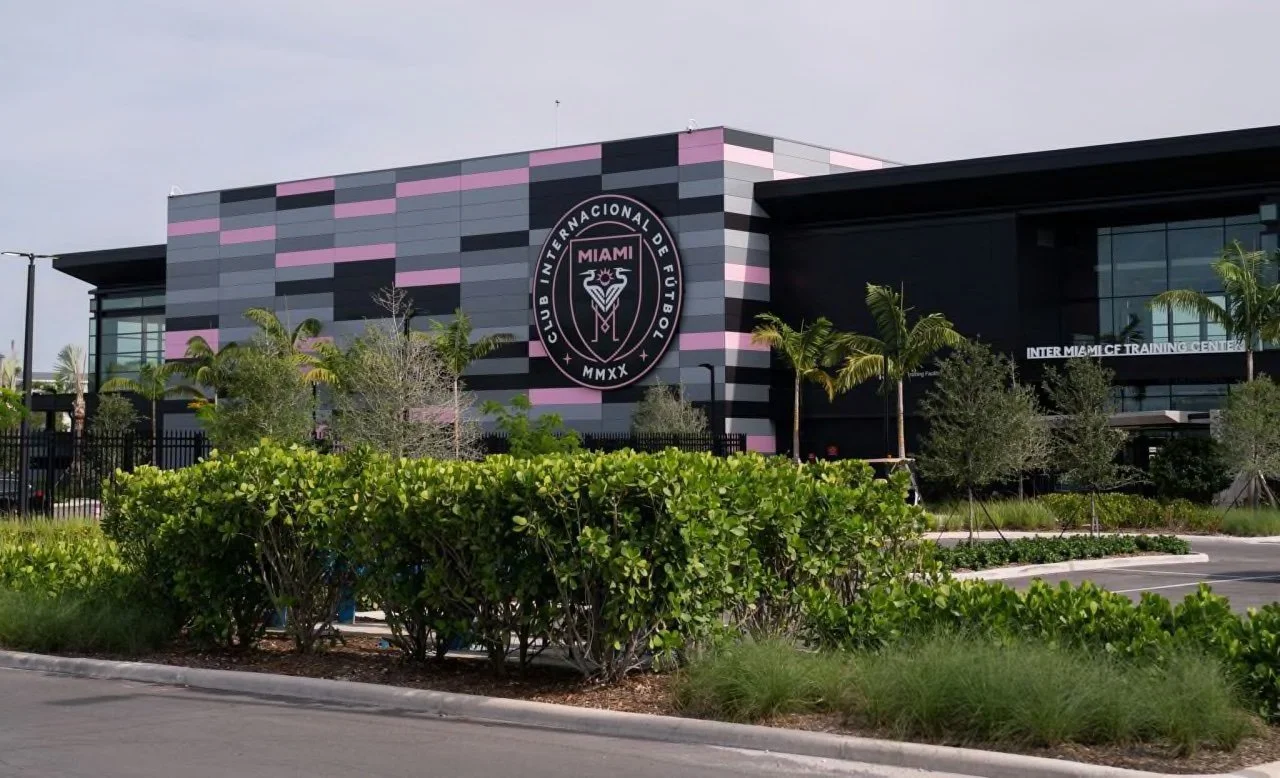
EV charging at your site — without the capital, complexity or operating burden.
PositivEnergy Charging-as-a-Service (CaaS) is a turnkey program for property owners, municipalities and fleet operators. We fund, design, install, operate and maintain the entire charging system. You get a fully managed amenity — and a share of the revenue — without ever touching a charger.
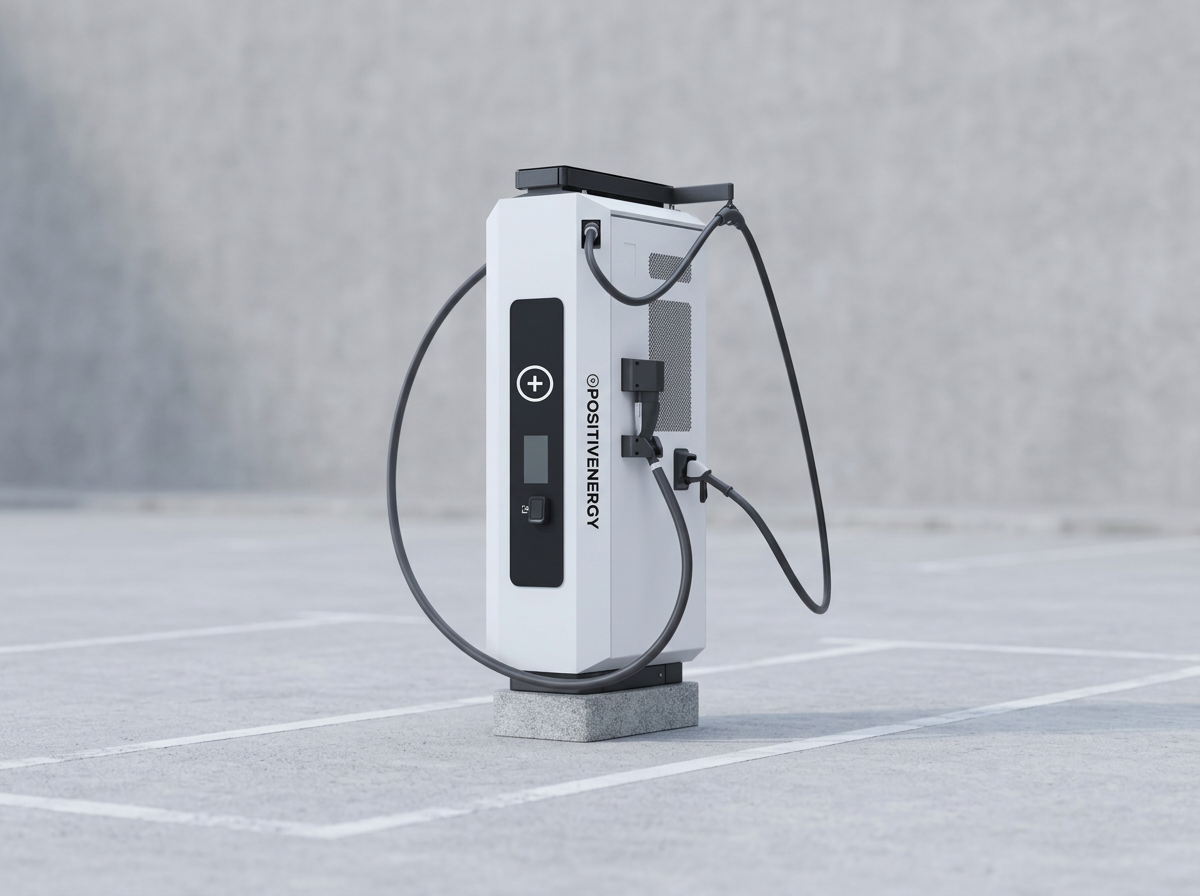
“Philadelphia’s goal is to make EV charging more accessible, reliable, and equitable for residents in neighborhoods across the city. We are grateful to our partners at PositivEnergy for sharing this vision, and for bringing their expertise to the implementation and deployment of our EV network.”
One agreement. The entire EV charging system.
Most charging projects fail because they're stitched together from a hardware vendor, an EPC, a software platform and a maintenance contract — each with a separate incentive and a separate failure mode.
Charging-as-a-Service collapses all of that into a single program. PositivEnergy provides the capital, the engineering, the installation, the operating software and the lifetime maintenance under one accountable agreement. The site host contributes the location; we deliver the rest.
The result is charging infrastructure that actually runs — and a host who earns from it instead of babysitting it.
The economics of EV charging — without the operational risk.
Zero upfront capital
PositivEnergy funds the hardware, construction, utility upgrades and software. No CapEx burden, no balance-sheet impact — you get charging on day one.
Single accountable owner
We own and operate the asset for its full lifecycle. One contract, one point of contact, one team responsible for uptime, revenue and reliability.
Revenue share, not a bill
Site hosts earn from charging activity through a transparent revenue-share model — turning unused parking into a productive amenity.
Future-proof technology
Hardware refreshes, software updates and power upgrades are built into the agreement. The site stays current as the EV market evolves.
Available through Sourcewell
Charging-as-a-Service is also available through our Sourcewell cooperative contract #051123-PST — streamlining procurement for cities, counties, schools and other public agencies.
From first site walk to long-term operations.
A repeatable five-step program PositivEnergy has executed across 7,952 sites evaluated and modeled.
Site assessment
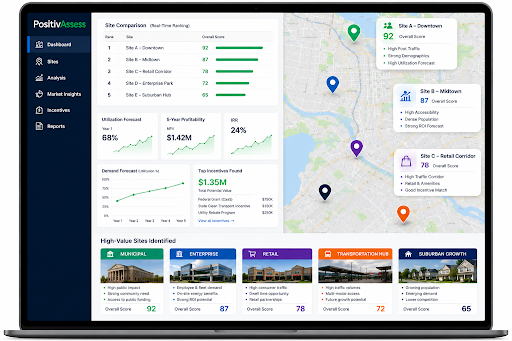
Our PositivAssess™ platform analyzes utility tariffs, traffic, demographics and grid capacity to model the right charger mix, power level and projected utilization for your site.
Design & engineering
Licensed engineers produce permit-ready drawings, coordinate with the utility on service upgrades, and integrate energy storage or solar where it lowers delivered kWh cost.
Construction & commissioning
We self-perform or manage trenching, conduit, switchgear, charger installation and network commissioning. Sites typically energize in 8–12 months depending on utility timelines.
Network operations & O&M
Our 24/7 NOC monitors every port. Certified field technicians, spares logistics and remote diagnostics keep the site at 90%+ uptime — backed by a contractual SLA.
Optimization & growth
Pricing, load profiles and capacity are tuned continuously. As utilization grows, we phase in additional ports, higher power levels or on-site storage.
8 – 12 months
From signed agreement to energized site. Driven primarily by utility service upgrade timelines.
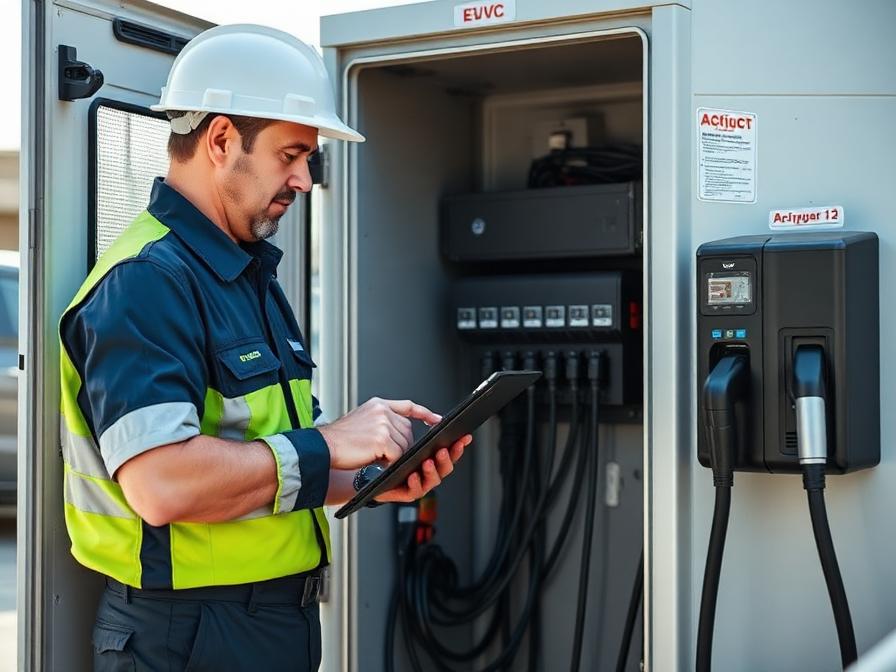
A 24/7 NOC, certified field service and a 90%+ uptime SLA.
CaaS is only as good as the day-two operation. PositivEnergy runs a 24/7 Network Operations Center, maintains nationwide spares logistics, and dispatches certified field technicians under a contractual uptime SLA most operators do not match. Hosts get a single dashboard — and a single phone number.
Built for hosts whose business depends on the site running.
Retail & grocery
Anchor visits, dwell time and basket size.
Hospitality
Hotels and resorts adding a high-signal amenity.
Multifamily
Workplace and residential charging for tenants.
Healthcare & education
Campuses serving staff, patients and visitors.
Municipal & government
Public charging for residents and fleets.
Fleet depots
Transit, school bus, refuse and last-mile depots.
Common questions from site hosts.
What does it actually cost the site host?
Under a standard Charging-as-a-Service agreement, the host contributes the parking spaces and a long-term site license. PositivEnergy funds the rest — equipment, construction, utility work, software and ongoing O&M.
How long is a typical agreement?
Agreements typically run 10–15 years, aligned with the useful life of the infrastructure and the amortization of utility upgrades. Hardware refreshes are built in.
Who maintains the chargers?
We do — end to end. 24/7 network operations, preventive maintenance, parts inventory and certified field service are all included. The host never deals with vendors or repair invoices.
Can we add solar or battery storage?
Yes. PositivEnergy equipment works well with on-site solar and battery storage — pairing them with CaaS deployments helps cut demand charges, improve resilience and unlock incentives.
What if our site needs grow?
Sites are designed with expansion in mind. We phase in additional ports and higher power levels as utilization climbs, without a separate procurement cycle.

Have a site? Let's run the numbers.
Tell us about your property. We'll come back with a CaaS proposal — covering charger mix, projected utilization, revenue share and timeline — at no cost to you.