
The components inside a PositivEnergy infrastructure deployment.
Hardware, software and lifecycle services inside our EV charging infrastructure agreement — DC fast charging, Level 2, mobile units, BESS, fleet design, turnkey deployment, O&M and operations software.
Host the infrastructure — or buy the hardware outright.
Whether you prefer Charging-as-a-Service — where PositivEnergy funds, builds, owns and operates the infrastructure — or a direct purchase of PositivEnergy hardware, both paths are available to cities, fleets, universities and private operators.
Charging-as-a-Service
PositivEnergy funds, builds, owns, operates and maintains the chargers under one multi-year agreement. Zero CapEx, revenue share, uptime SLA.
- $0 host capital
- Single accountable owner
- Revenue share, not a bill
- Available on Sourcewell contract #051123-PST

Direct purchase
Buy Level 2 and Level 3 chargers, mobile units and BESS hardware directly from PositivEnergy.
- DCFC, Level 2, mobile & storage
- Made-in-USA / NEVI-eligible options
- Available on Sourcewell contract #051123-PST
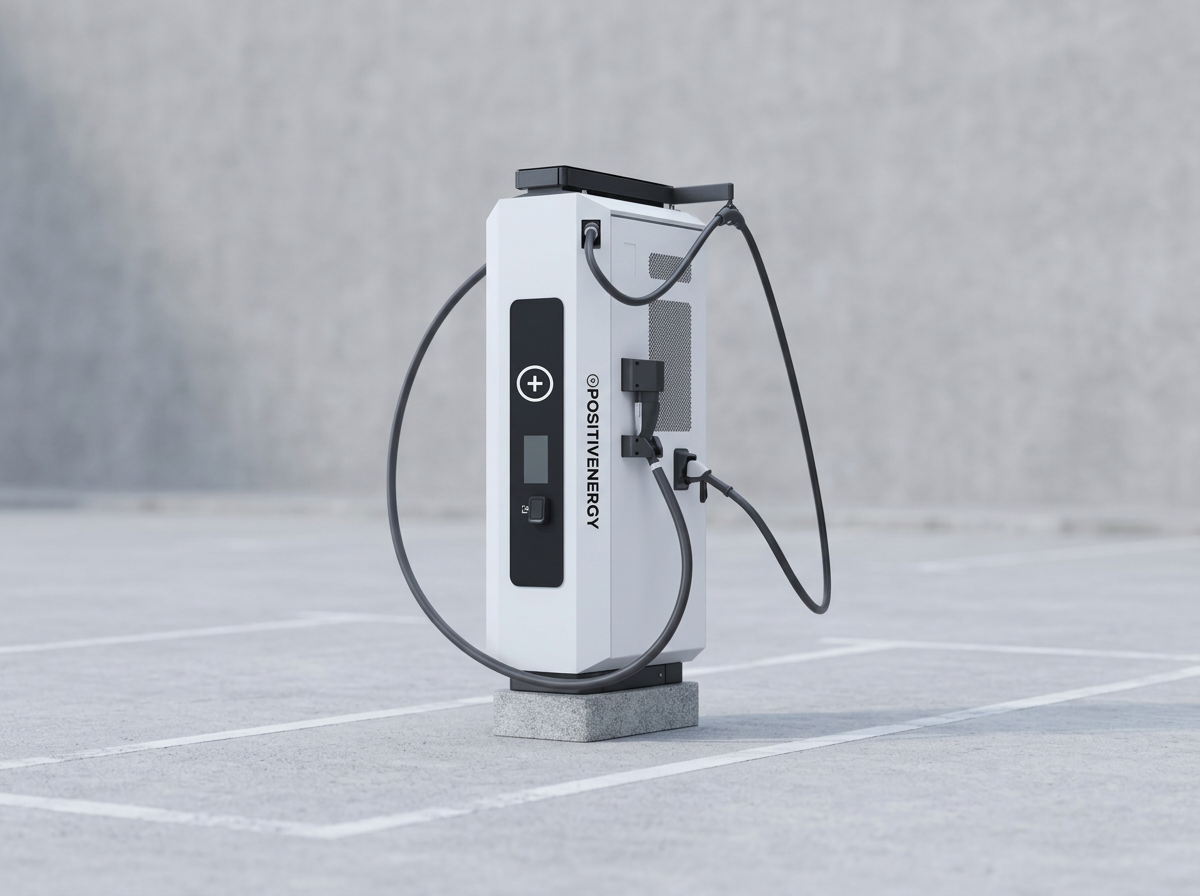
DC Fast Charging
Best-in-class Level 3 fast charging — future-proofed, with Made-in-USA options.
Overview
Our DC fast charging portfolio is engineered for high-utilization sites: highway corridors, fleet depots, transit yards, retail and hospitality. Air-cooled architecture eliminates coolant systems, lowers preventive maintenance, and avoids environmental spills — while a modular power-cabinet design lets a single site scale from 50 kW up to 360 kW and beyond.
Key features
- Power tiers from 50 kW to 360 kW+ in a single product family
- Vehicle-to-grid (V2G) capable — bi-directional revenue ready
- Air-cooled design lowers OPEX and removes spill risk
- Customizable software platform and OCPP-compliant
- Custom branding, wraps, and dispenser configurations
- Made-in-USA options for Buy America / NEVI compliance
Specifications
- Power output
- Up to 360 kW
- Connectors
- CCS1, NACS, CHAdeMO (varies by SKU)
- Architecture
- Modular power cabinets + remote dispensers
- Cooling
- Air-cooled (no liquid coolant required)
- Communications
- OCPP 1.6J / 2.0.1, 4G LTE + Ethernet
- Compliance
- UL 2202, Energy Star, NEVI-eligible SKUs
Use cases
- Highway corridor & destination charging
- Heavy-, medium-, and light-duty fleet depots
- Transit and refuse yards
- Retail, hospitality and travel centers
Options & variants
- Pull-through, drive-through and back-in stall layouts
- Pedestal or wallmount dispenser
- Pull-up canopy and weather-protected variants
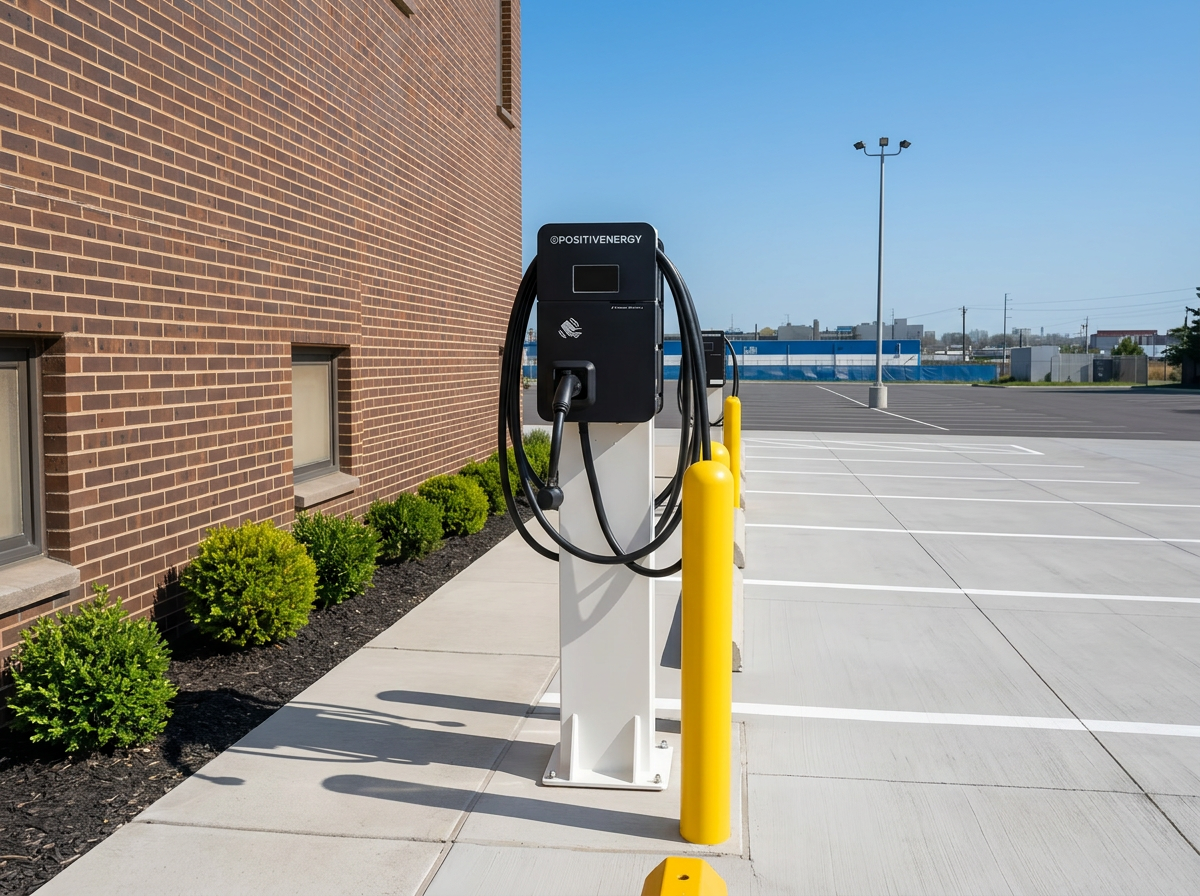
AC Level 2 Charging
Reliable, affordable Level 2 — universally designed for every vehicle.
Overview
Our Level 2 line covers everything from workplace and multifamily to curbside and depot dwell charging. At up to 19.2 kW it delivers roughly twice the throughput of a typical Level 2 unit — without triggering the infrastructure cost of DCFC. Indoor and outdoor rated, wall- or pedestal-mountable, and fully networked.
Key features
- 9.6 kW to 19.2 kW output — twice the average L2
- No utility upgrades or special infrastructure required
- Indoor and outdoor rated (NEMA 4 / IP-rated enclosures)
- Wall or pedestal mount — one product, two installs
- ADA-compliant variants and curbside-ready
- Customizable software with load management
Specifications
- Power output
- 9.6 kW – 19.2 kW (40–80 A)
- Input voltage
- 208 / 240 VAC, single or three-phase variants
- Connector
- SAE J1772 / NACS
- Mount
- Wall or pedestal
- Enclosure
- Indoor & outdoor rated
- Networking
- OCPP 1.6J, Wi-Fi / cellular
Use cases
- Workplace and employee parking
- Multifamily housing and condominiums
- Curbside and on-street programs
- Fleet depots with overnight dwell time
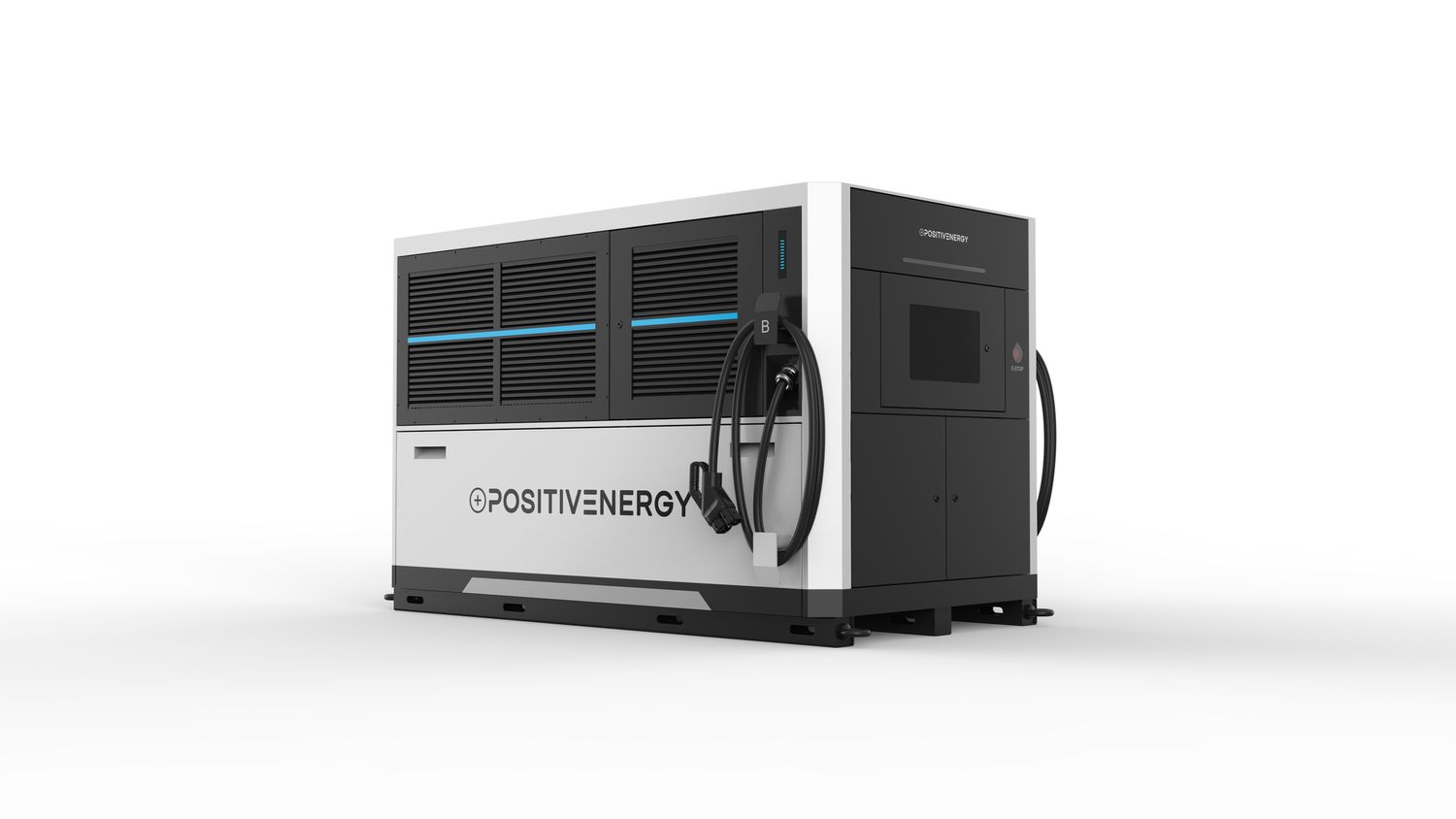
Mobile Charging — on-the-go power
Convenient, beautiful and powerful. Energy delivered wherever you need it.
Overview
Mobile charging units bring DCFC-class power to sites without grid capacity — temporary venues, construction, film and television, emergency response, and depot bridging while permanent infrastructure is built. Self-contained battery + power conversion lets you charge fleet vehicles at off-peak utility windows and dispense during the day, avoiding peak demand charges and utility upgrade costs.
Key features
- 50 kW, 120 kW and 200 kW configurations
- Available with or without integrated EV cables
- CCS1 compatible — universal vehicle support
- Rapid deployment, no construction required
- Customizable software platform with remote management
- Charge off-peak, dispense any time — sidestep utility upgrades
Specifications
- Power output
- 50 / 120 / 200 kW
- On-board storage
- Configurable battery capacity per duty cycle
- Connectors
- CCS1 (NACS adapter available)
- Form factor
- Towable trailer / skid-mounted
- Deployment time
- Hours, not months
Use cases
- Disaster response and grid outage backup
- Construction sites and remote operations
- Live events, festivals, film & TV production
- Bridging power while permanent depot is built
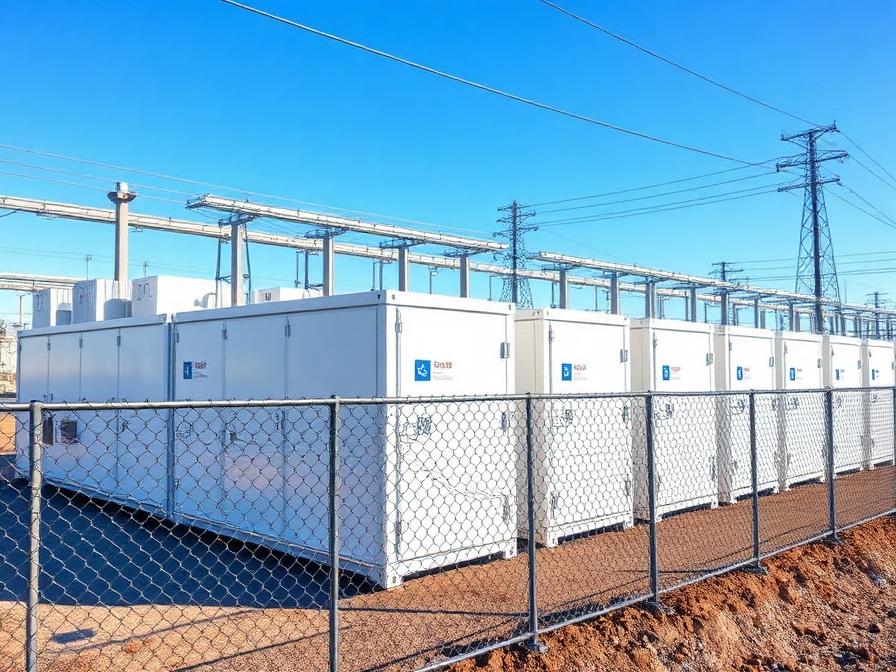
Battery Energy Storage
BESS purpose-built to optimize charging, manage demand, and harden the site.
Overview
High-power BESS engineered to pair with charging. It shaves peak demand (often cutting utility charges by up to 50%), keeps DCFC online through grid disturbances, and unlocks revenue from grid-services programs where available. Behind-the-meter and front-of-meter configurations.
Key features
- Demand-charge avoidance — up to 50% utility savings
- Backup power for charging during grid outages
- Standalone or paired with DCFC and solar
- Behind-the-meter or front-of-meter deployments
- Microgrid-ready with islanding capability
Specifications
- Configurations
- Containerized, modular, scalable kWh blocks
- Use modes
- Peak shaving, backup, energy arbitrage, V2G stacking
- Integration
- Native pairing with PositivEnergy DCFC and PV
Use cases
- Sites with high demand charges or thin grid capacity
- Mission-critical depots needing uptime through outages
- Solar-paired charging hubs
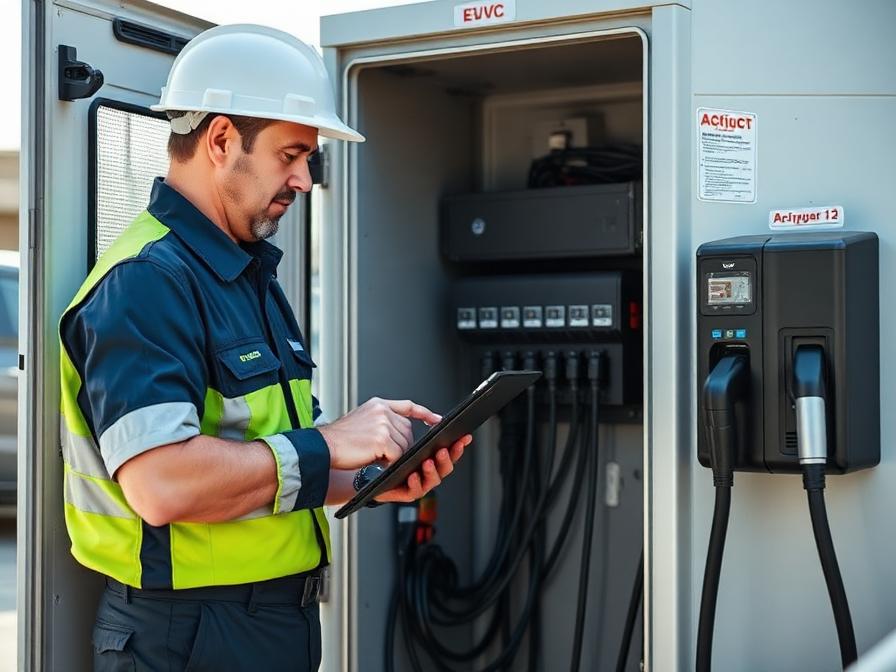
EV Infrastructure Services
End-to-end infrastructure delivery — feasibility through year-ten O&M.
Overview
PositivEnergy delivers turnkey deployment and infrastructure operations end-to-end. One contract. One single accountable partner. From the first site walk through commissioning and ongoing operations to year-ten of O&M, every layer is delivered by our team — infrastructure planning, utility coordination, permitting, construction management, commissioning, network operations, asset management and long-term uptime SLAs.
Key features
- Infrastructure planning through operations — single accountable partner
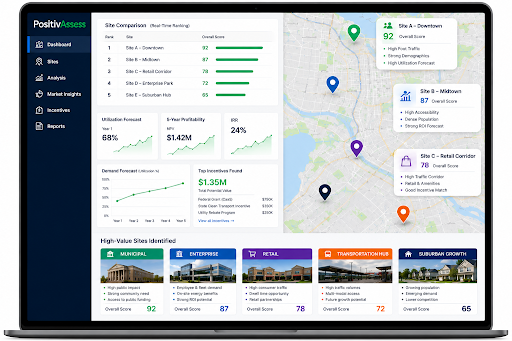
- Site selection & qualification with PositivAssess™ modeling
- Facility and utility infrastructure upgrades with full utility coordination
- Permitting, design, engineering and turnkey construction
- Operations & maintenance (O&M) with 24/7 NOC and 90+% uptime SLA
- Incentive identification, grant management and procurement-ready packaging
Specifications
- Coverage
- United States — multi-state programs
- SLA
- Up to 97%+ uptime guarantees
- Response
- 24/7 Network Operations Center
- Capital options
- CapEx, OpEx, Charging-as-a-Service
Use cases
- Municipal and transit electrification — mission-critical fleet charging
- Public charging network operations for multi-site fleet operators
- Real estate portfolios and REITs needing site host services
- NEVI and federally funded corridor programs
EV Charging Software
Platform optimized for reliability, revenue and cost management.
Overview
Our software gives owners and operators a single pane of glass over every charger, every session, every dollar. Real-time pricing controls, comprehensive reporting, remote diagnostics, fleet optimization, and a driver app — backed by 24/7 support. Built on data from 7,952 sites evaluated and modeled across the U.S.
Key features
- Full operational control of pricing — real-time changes based on energy cost
- Real-time visibility into station use, revenue and operational health
- Healthier stations: remote monitoring, advanced diagnostics, 24/7 support
- Reduced energy costs with load management and scheduled charging
- Enhanced driver experience with easy-to-use app and support
- Fleet optimization: charging orchestration, alerts, and cost reporting
Specifications
- Standards
- OCPP 1.6J / 2.0.1, ISO 15118 roadmap
- Integrations
- Roaming networks, fleet telematics, billing & ERP
- Analytics
- Session, revenue, utilization, uptime, energy mix
- Apps
- Operator console + branded driver app
Use cases
- Site hosts monetizing public charging
- Fleet operators optimizing depot energy spend
- Networks needing white-label driver apps